


CanDetect at SAPC and WONCA 2026: Sharing research on AI scribes
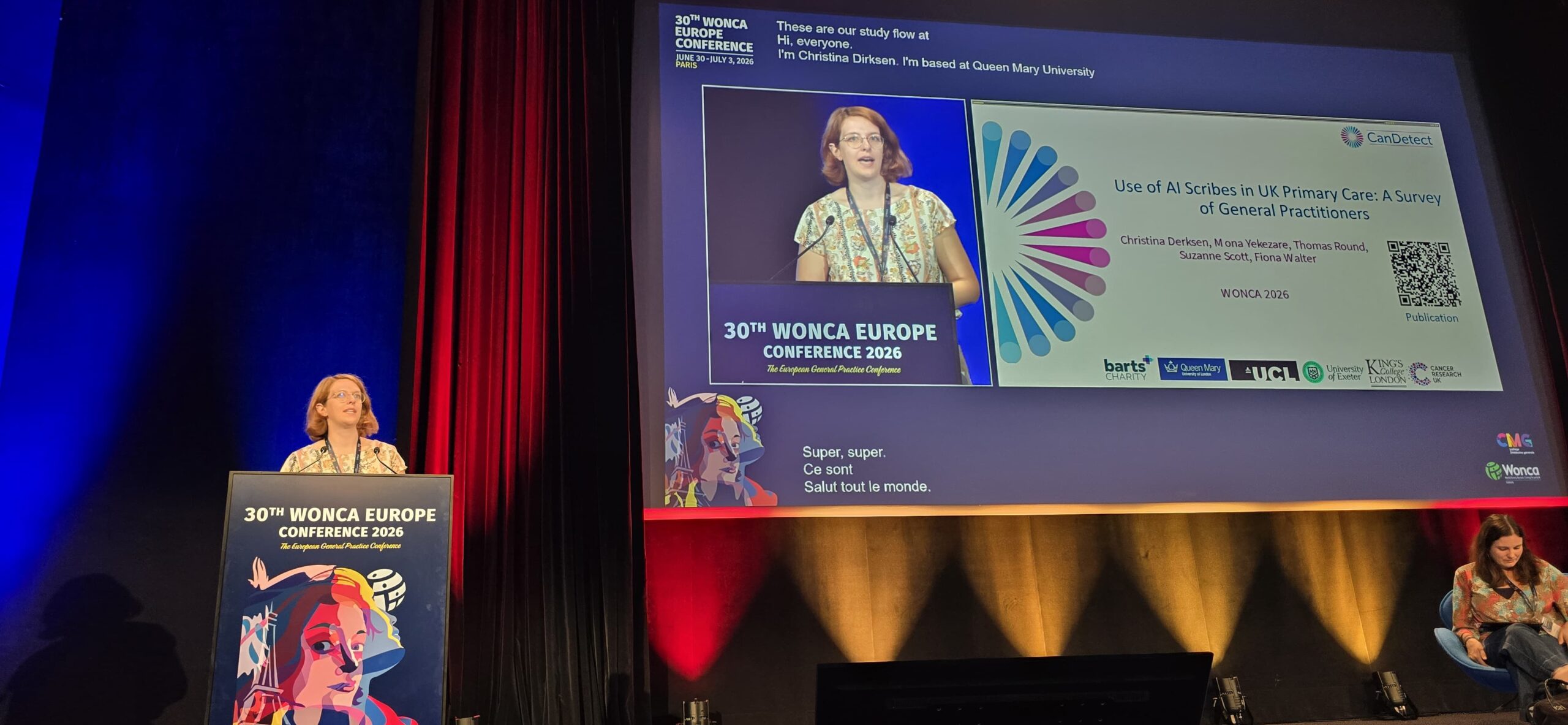
Dr Christina Derksen presenting at the 30th WONCA Europe Conference
In June and July 2026, Dr Christina Derksen shared the CanDetect team’s work on AI scribes and diagnostic decision-making with the wider primary care research community at two conferences: The SAPC (Society for Academic Primary Care) conference in St Andrews and WONCA (World Organization of Family Doctors) 2026 in Paris.
SAPC 2026 in St Andrews
In St Andrews, Christina presented at the Digital Technologies in Primary Care Special Interest Group. The presentation introduced our recent survey and opened up a discussion about the potential long-term effects of new technologies, particularly AI scribes, on diagnostic decision-making in primary care. A central theme was the question of accuracy and usefulness: how reliable are these tools in practice, and where do they add value for clinicians without causing extra diagnostic workload caused by overly long notes?
Just as important was a conversation about clinical skills. As AI scribes take on more of the documentation burden during consultations, the group discussed whether clinicians could lose important synthesis skills, or whether tools could instead free up attention and support better clinical reasoning.
WONCA 2026 in Paris
Christina also travelled to Paris for the World Organization of Family Doctors (WONCA) conference, where she had the opportunity to meet primary care professionals already using AI scribes in their day-to-day practice, as well as representatives from commercial partners developing these tools.
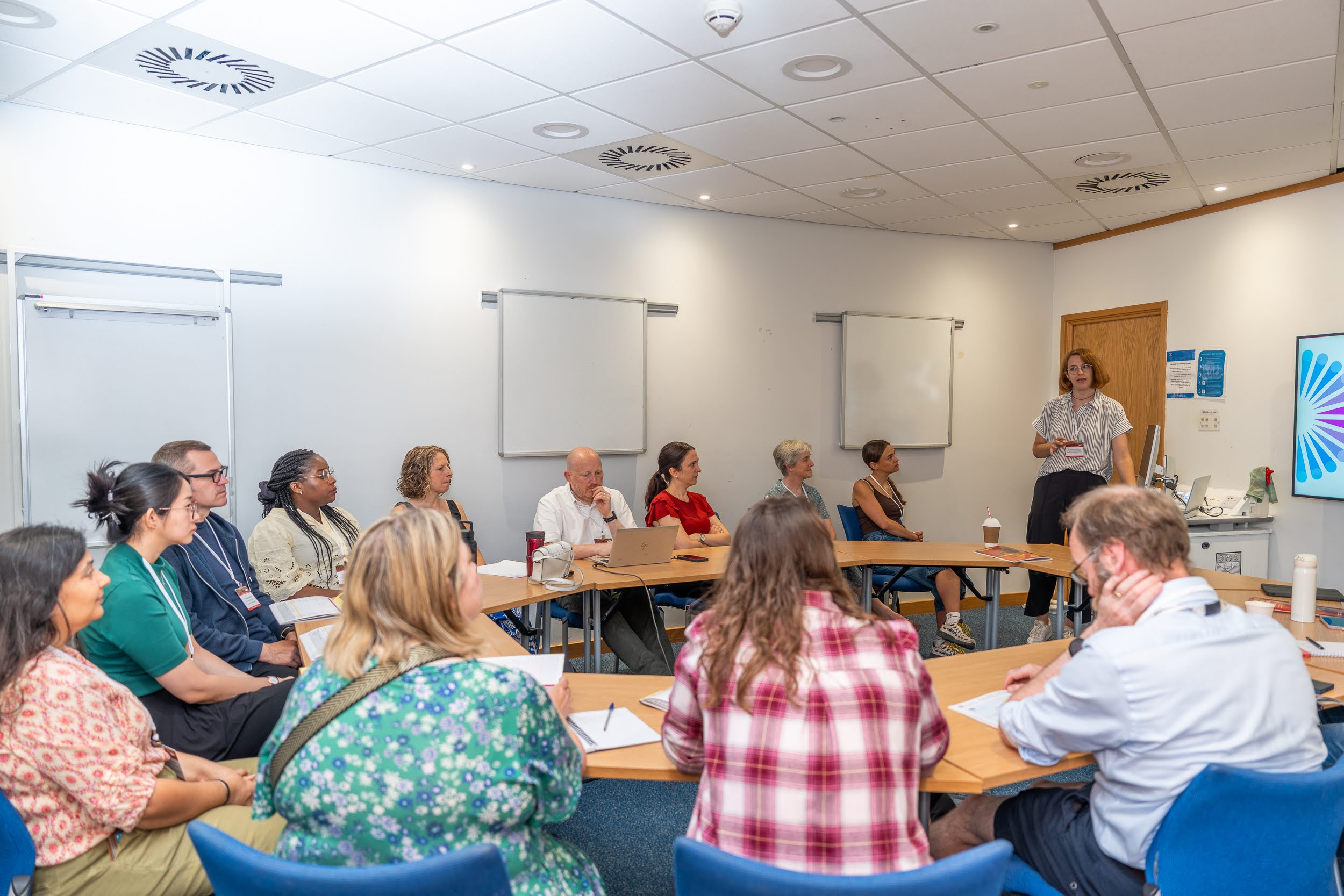
Dr Christina Derksen presenting at the SAPC conference
With these representatives, she discussed the practicalities of implementation in primary care, especially what patient consent should look like, and the role of emerging AI use to generate clear, plain-language information about a consultation.
Looking ahead
Across both events, Christina connected with researchers, clinicians, and companies across both events, gathering perspectives that will inform new research directions within CanDetect. It became evident how new technologies might impact the detection of cancers, especially those with vague or unspecific symptoms such as upper-gastrointestinal cancers. The work on AI scribes
will help to understand how diagnostic decisions are made as new technologies using AI become part of everyday primary care.